
The Killer Code Series™
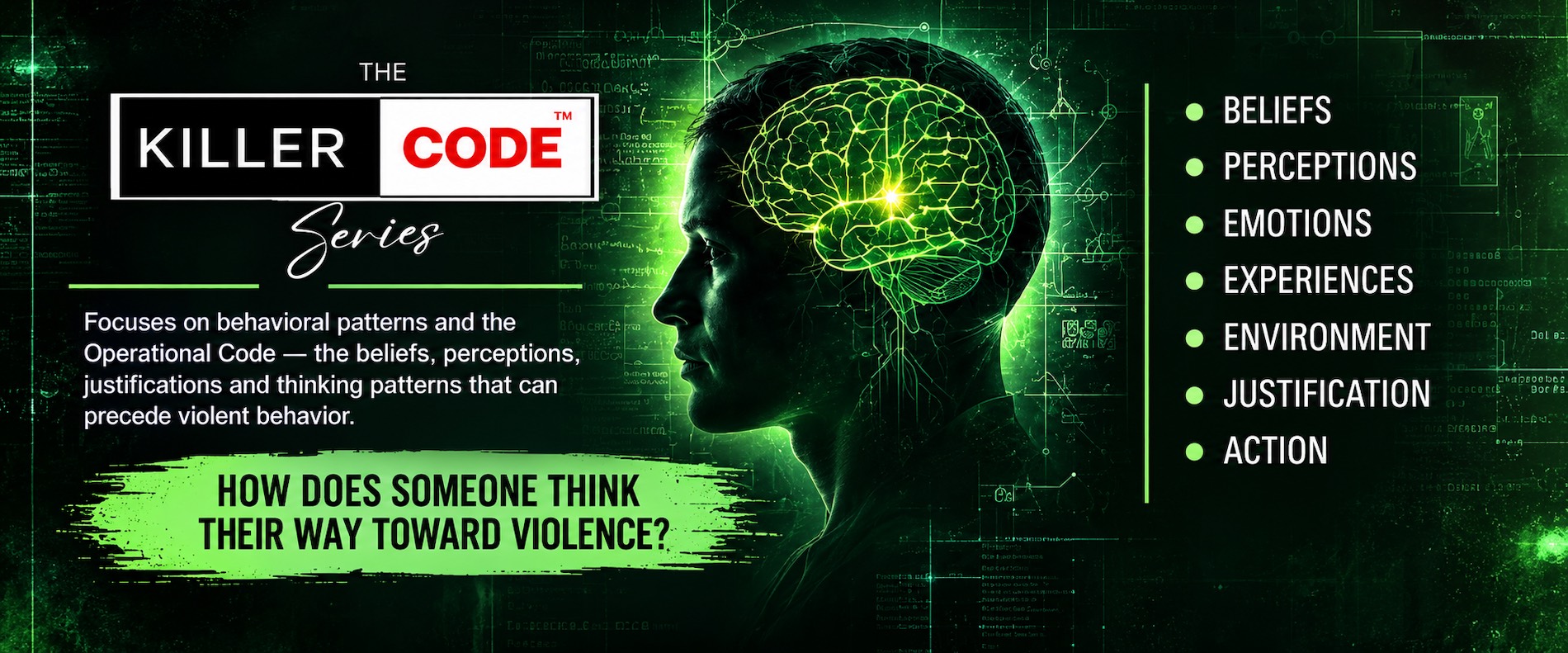
The Killer Code Series™ is the overarching educational and investigative framework for examining homicide from multiple behavioral and investigative perspectives. Rather than looking at a homicide as an isolated event, the series takes a broader view, examining the why, the behavior, the offender, the victim, the circumstances, and the patterns that may connect them. At its core is the Operational Code, which provides a framework for examining how beliefs, perceptions, experiences, emotions, and environmental influences can shape behavior and ultimately lead to action.
Within this larger framework are specialized courses that examine different pieces of the puzzle. Reasons Why People Kill™ explores the drivers and pathways behind homicide. Case Lab™ applies those concepts to real-world cases and investigative analysis. Killer Anatomy™ focuses on the offender, examining behavioral mindset, belief systems, motivations, patterns, and potential connections across cases. Together, these courses create a comprehensive learning experience designed to help participants move beyond simply asking “What happened?” and begin examining “Why did it happen, how did the behavior develop, and what can the pattern tell us?”
Reasons Why People Kill™
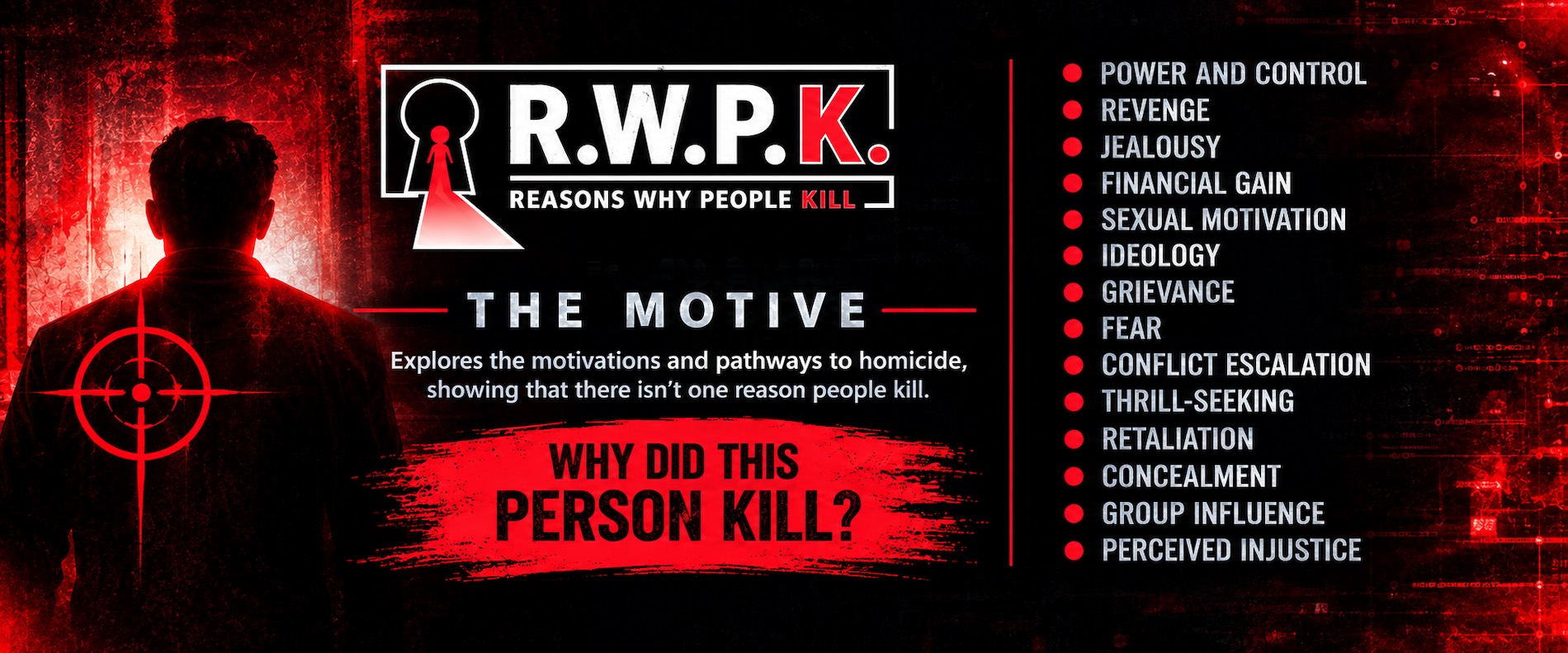
The foundation of The Killer Code Series™, this course examines the behavioral, psychological, social, and situational factors that can contribute to homicide. Participants explore how beliefs, perceptions, experiences, emotions, and environmental influences can shape behavior and contribute to a pathway toward violence. The course introduces the Operational Code as a framework for understanding not only what a person did, but the thinking and behavioral processes that may have influenced why they did it.
Killer Anatomy™
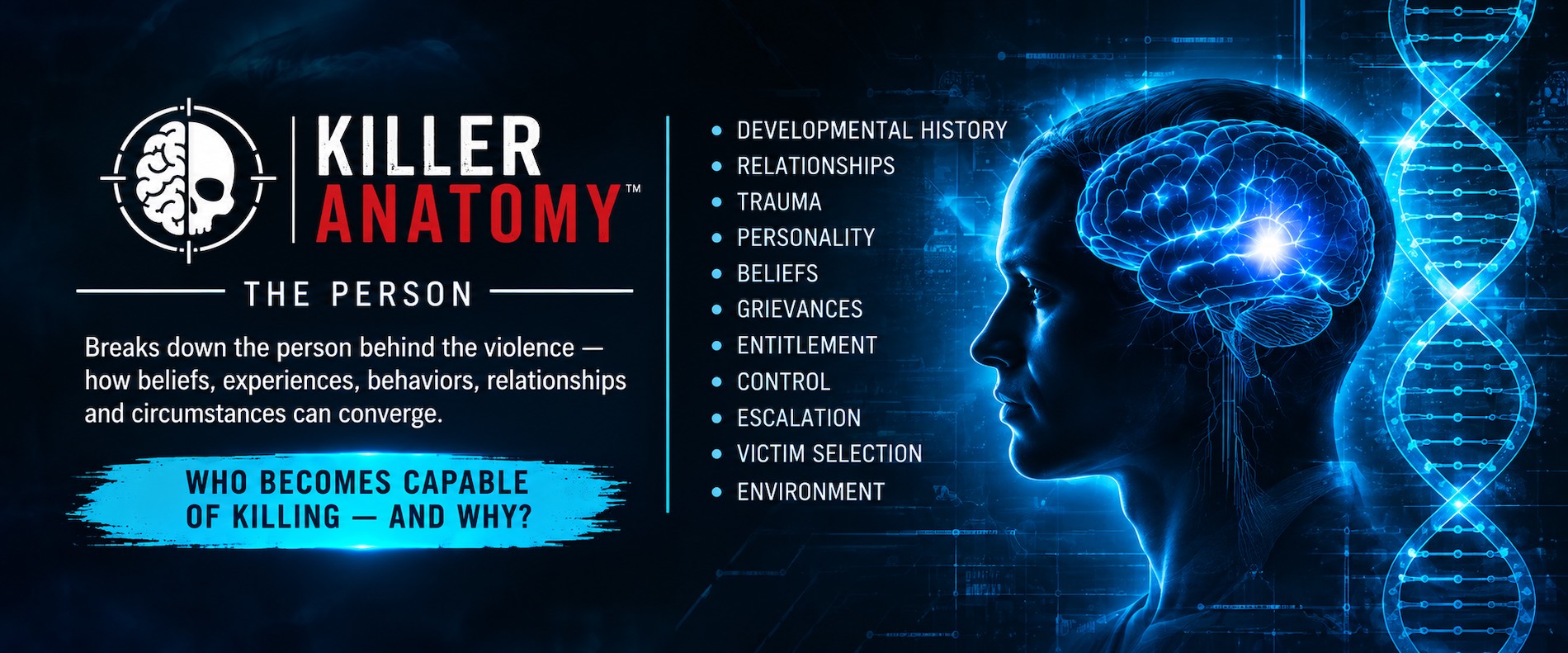
Killer Anatomy™ takes an in-depth look at individual offenders and the behavioral systems behind their crimes. Rather than focusing solely on biography or criminal history, participants examine belief systems, behavioral mindset, motivations, victim selection, escalation, Operational Code patterns, and potential connections across cases. The goal is to understand the offender as a behavioral system, examining not simply what they did, but how and why their patterns developed and operated over time.
Case Lab™
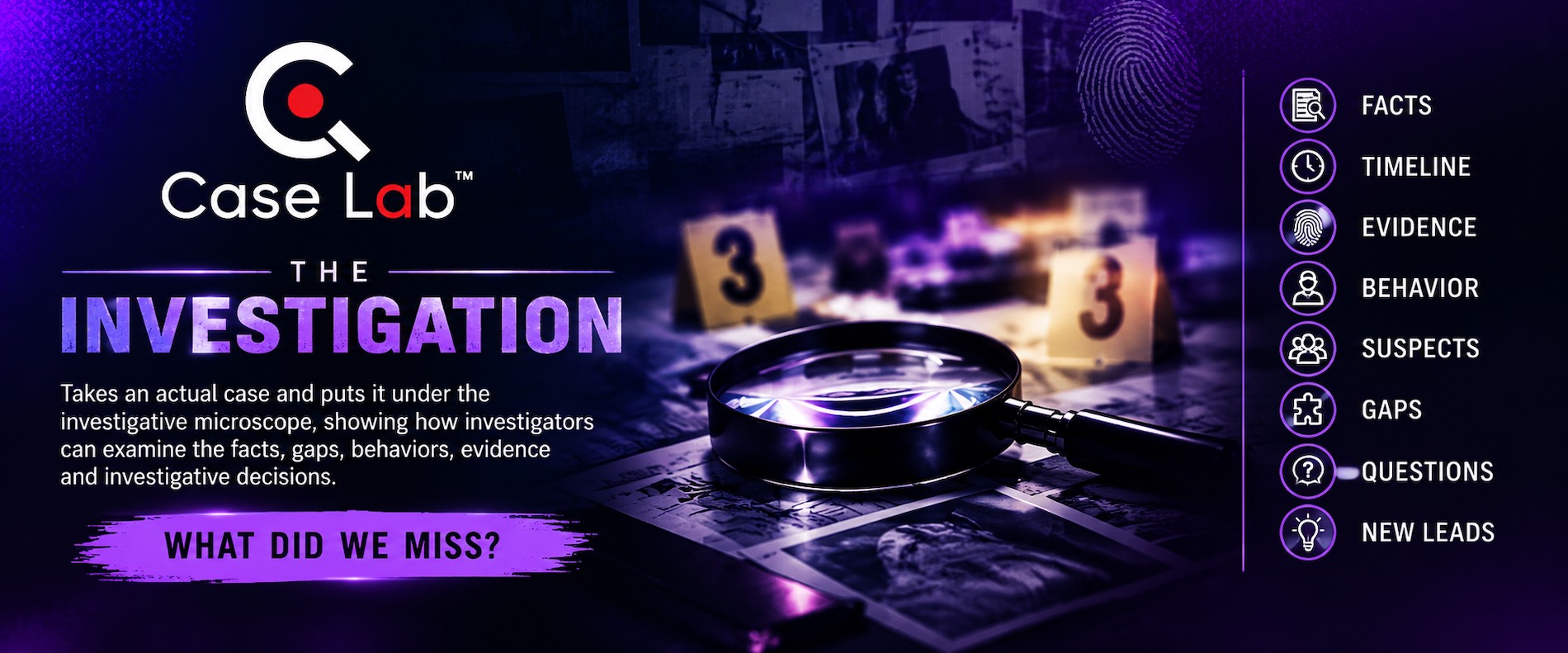
Case Lab™ takes the concepts from the classroom and places them into real-world investigations. Participants work through actual cases as interactive learning exercises, examining victimology, timelines, behavior, evidence, investigative gaps, and potential behavioral patterns. The goal is to move beyond simply reviewing a case and teach participants how to analyze information, develop behavioral hypotheses, recognize patterns, and ask the questions that may lead to new investigative possibilities.